Showing posts with label rpg. Show all posts

Sunday, June 29, 2014

Panzer Dragoon Saga


With its compelling story and cinematic battles, Panzer Dragoon Saga is one of the most unique RPG's ever made.

Known in Japan as Azel, Panzer Dragoon RPG, it was released in 1998 on the Sega Saturn by Project Andromeda, it was the latest entry in the popular rail shooter series on the commercially unsuccessful console. Though this time, Andromeda decided to create a very different game, but with a few similarities to its predecessors for some familiarity. Despite being a critical darling, and being considered one of the best RPGS and video games of all time, and earned a spot at #22 on G4's 100 Greatest Video Games of All Time, this game failed to sell because it was released very late in the Sega Saturn's lifetime. The game was released in April, and the console was discontinued in August, only 30,000 copies of Panzer Dragoon Saga were sold in the US, and any English copy of the game is rare and can run you at least $300 USD on sites like Ebay, making this a collector's item.


Story:
Taking place in a post-apocalyptic world, you play as Edge, a young solder who is in a group charged with protecting an excavation site. All seems well until an evil monster attacks you. While escaping this creature, you then stumble upon what appears to be a girl sticking out of the wall. Before you know what this is, some imperial troops come and attack your group. These troops are led by the evil Craymen and they ruthlessly kill everyone and take the wall containing the girl. In a fit of rage, you try to attack the soldiers and you are then shot off the cliff down into a ravine.

Apparently unharmed, you wander around confused and run into a mysterious dragon who seems that he wants to help you. You have some strange spiritual connection with the dragon and you place your trust in him, and the dragon whisks you out of the ravine and takes you to your captain. As you watch your beloved captain die, you vow to go on a revenge to kill Craymen and you and the dragon go off on your search for Craymen and try to solve the mystery behind that girl.
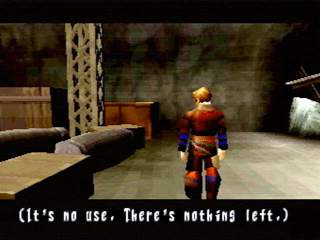
The game is largely voice acted, but it seems like Team Andromeda cut some corners on the localization by keeping the Japanese voices, instead of dubbing it over. Luckily they have subtitles.


Gameplay
While the previous Panzer Dragoon games are rail shooters, Saga is an RPG with mostly free-roaming exploration. There are two modes of exploration: flight, and on foot. On foot exploration is where you control Edge, and mostly takes place in towns. Towns serve the typical RPG purpose of collecting information on where to go, and can sometimes buy items. The game carries over some of its rail-shooting roots by having you call up a targeting cursor to select items or people. All of the dialog in the game is voice acted. The opening movie is in a made up language that's unique for the series, but the rest of the in-game voices are spoken in Japanese with English subtitles, which is sort of confusing with why they're different.

Flight exploration is basically this game's version of dungeons. You control the dragon and you fly around full 3D environments and can fly in any direction. Similar to foot exploration, you have the targeting cursor to select item chests, suspicious places, and target the save machines. Many of these dungeons also have some kind of puzzle that allows you to progress further into the dungeon. These dungeons feature the typical random encounters that everyone either hates or tolerates. This is where the game gets even more unique.

The game features a strange, and very unique and very cinematic battle system. The game is sort of in real time, and you have 3 bars that fill up over time, and sort of like the ATB system in Final Fantasy games, when a bar is filled, you are able to perform an action in battle. Having all 3 bars filled means you can perform 3 consecutive actions. While you wait for your bar(s) to fill up, you are able to maneuver around the enemies to avoid attacks and target their weak zones. There is a radar on the bottom that indicates: neutral, hazardous, and safe zones. These are subject to change, either from the monsters also able to rotate their position, or from the monsters changing these zones. Safe zones mean you're safe from attack, neutral means you either have a chance of attack, or the monsters use their weaker attacks on you. The hazardous zones mean that you're prone to being heavily attacked by the monster's special move.

With the action gauges, you have three choices: you can either use a basic attack, use a berserk move, or use an item. With the basic attack, you either have a choice between using the dragon's attack to target on a single target, or use Edge's laser to attack several targets. If you have one target, then these lasers will attack the same target multiple times. It's more wise to use Edge's laser to attack since it either does more damage, or attacks multiple enemies, making the battles less time consuming. Berserk moves don't need that much of an explanation, basically it just like your typical RPG magic/special attacks. At the cost of berserk points, you can cast either a really strong attack, or heal yourself. After a battle, it ranks you based on how well you fought and better scores give you more EXP.

Another aspect is dragon transformation and dragon morphing. Transformations only happen at key story points, and your dragon changes shape and becomes stronger. With morphing, you have a giant circular gauge with 4 points: attack, spirit, defense, and speed. You move your cursor around to get your dragon's stats to focus on these various stats, or just have it dead center for balanced stats. These various points also alter how your dragon looks.


Visuals
While they're pretty good for Sega Saturn standards, they look sort of clunky today. Especially since the Sega Saturn's graphics uses quadrilaterals for their polygon rendering instead of triangles like the PS1 and N64. The battle scenes are still very nice, and are sort of like the charm point of the game. The battles are very flashy and the attack sequences are pretty well animated, especially the boss scenes. While flight mode is nice, the lack of the use of fog and the short draw distance sometimes makes distant objects sort of pop up out of nowhere instead of fading in so keep that in mind. The on foot scenes are where the game also shows its age with the characters. So if you can deal with blocky characters, you'll be okay. There are also a few full CGI cutscenes that look very nice compared to the rest of the game.

The environments themselves focus largely on the typical post-apocalyptic scenery, much of the game has a depressing desolate feeling. You venture through hazardous cliffs, vast deserts, and even several ruins that are in the previous environments, and even scattered over a sea. Typical post-apocalyptic signs that a past war has ravaged the entire world.

On foot:


Flight exploration:


Music
The music for it is sort of strange. Unlike other RPG's where the soundtrack is almost entirely of a symphonic nature, Panzer Dragoon Saga seems to range between the standard symphonic music with other songs that are almost tribal sounding. This makes Panzer Dragoon Saga's soundtrack one of the most interesting, adding more to the overall unique feel of the game.


Verdict:
Panzer Dragoon Saga is definitely one of the most ambitious RPG's ever created, and definitely one of the best swan songs for a video game console, it's a definite must have for anyone who's a fan of RPG's. On a whopping 4 discs with its very unique and innovated gameplay, and amazing cinematic battle system, even several years later, this game still has no counterparts and sits in a RPG world where it is the only game that mixes aspects of a rail-shooter into its battle system. Though since this game had a limited print, you're stuck with three choices: coughing up a few hundred bucks for the game, illegally playing it on a Sega Saturn Emulator (or modding your Saturn to play pirated games), or patiently wait until someone either ports the game and/or remake it, seeing that Team Andromeda is a now defunct company. We all pray that this game will someday see the light of day and get more recognition that it certainly deserves. This isn't a game that's hyped up based on its rarity, it's praised because there is simply no other game like Panzer Dragoon Saga.


Music: 6/10.
Visuals (Or Graphics): 8/10.
Story: 9/10.
Content: 9/10.


Conclusion: 8/10

Thursday, March 13, 2014

Hyperdimension Neptunia Victory Review


Hyperdimension Neptunia Victory is your average anime themed RPG. It was also the third game released for the Neptunia series, it also takes place after the events of Hyperdimension Neptunia mk.2 which was released February 28th 2012. So is this game worth a look and can it interest you? Well there certainly is promising aspects but also its fair share of knacks as well. See if this anime RPG is the right kinda game for you to buy.

Story
The story takes place after the events of Hyperdimension Neptunia mk.2 and not much of recent has gone on in the nation of Gamindustri. Besides the nations of Lowee, Leanbox, Planeptune, and Lastation competing for dominance though, and a odd girl trying to promote the uselessness of CPU's. One day though when Neptune and Nepgear get in a argument and Neptune leaves Planeptune she encounters the odd girl and is later sucked into a void. This throws her into a alternate dimension where she doesn't exist as Planeptunes CPU goddess but another girl named Plutia instead. How will Neptune get return to her dimension which is also experiencing issues of its own while she is gone.

Gameplay
The gameplay is like your average RPG where you level up, buy equipment that can make your character stronger, and explore dungeons and such where you can battle enemies. Other features were included too but that will be looked over later in this review. Starting with the battle system it is the same as what was incorporated in mk.2 when you entered a battle. Basically there is a set area on the map and that area is the size of the battlefield space, you move your characters freely around in this space to get close and attack enemies. If you push against the border of the battle space it will allow you to retreat and leave the battle.

Up next is the button combination moves where you can mix and match different moves to unleash stronger attacks against your foes. Its a interesting way of doing things being able to string together different combos which unleash all sorts of attacks you can unlock down the road as you progress in level. There are indeed special attacks for each of the CPU's that can as well be learned and utilized through the game. It certainly overall adds a different feeling then the normal means for attacking you see in RPG games, and can be fun creating lots of combos that you feel gives you the best chance to win. The game itself also has adequate difficulty, but not too difficult.


Like most RPGs you will traverse many dungeons and you do so in this game as well traversing through the 3D environments provided. Of course enemies roam the areas and if you hit them first you can get the jump on them in the battle, of course it goes vice versa as well if you get hit first.There are also lots of areas to unlock for each continent and some are even references to certain game titles released, depending if you are in Lowee, Leanbox, Lastation and such. When you also go into a CPU's city like Lastation you can also talk with the random NPC's whom always have something to say and also are references to other games.


Quests are also a thing and do help you with the goodies they reward you with. Though some make it so you need a second playthrough so you can take on their challenge in defeating some of the strongest foes in the game. Completing the quests is important though especially if you want to get the maximum grade for each chapter of the game. Though quests can be halted though not only by lack of level but also lack of areas unlocked.

Unlocking new areas however in this game goes hand in hand with the new scout system. You are allowed to send scouts out and while you are fighting enemies in dungeons they search for things. Sometimes they are unsuccessful and bring you nothing, sometimes they bring you money, new scouts, unlock new areas or adding bonuses like more money aquired after battles or stronger enemies in dungeons. You also can give them more money for hopes of greater success, and if this scouts are successful in doing their duties they level up. Overall it is a very interesting system added into the game that you will indeed use a lot for quests and such.

Music
The music in the game is enjoyable and has some good tracks to offer. You have some of the more calmer tracks and places like the desert and forest dungeons for some tranquility followed by more upbeat tracks when you reach the retro cyber themed stages. Of course many more exist down the list and provide for a good listen. Below are some tracks from the game series you can take a listen to:


https://www.youtube.com/watch?feature=player_embedded&v=VDd7-_OzchY#t=0


https://www.youtube.com/watch?feature=player_embedded&v=7uvbUy5mfFg


https://www.youtube.com/watch?feature=player_embedded&v=rHh_-xvmcOg


Visual
The game itself has good in it with its visuals, the characters designs and portraits are nice and the areas are something to look at as well. There are also CG's that get provided throughout the game at certain points which adds as a plus as well. Graphically the game will not wow you but hits the bullseye as a solid looking game. Unfortunately in terms of dungeon layout and design thats where things get rocky. As an example in the game there will be a forest dungeon you can enter, lets say one in Lastation's continent another in Leanbox's continent, the issue arises when the layout for the dungeon is not different and there is really not much variety to the stage. Many more forest dungeons exist in different continents but the result is still the same with the layout being a rehash with barely any changes. The same goes for dungeons with desert themed areas having almost a photocopy layout of eachother. So overall you will really start feeling like you've been to the same place multiple times without change.


Conclusion
Hyperdimension Neptunia Victory can certainly offer enjoyment to your average anime or PRG gamer providing a fair experience. While some things could have been done better such as the environment layouts in dungeons which is a major negative do to it being what you spend a good sum of time in there are things the game does fair in. It may not be the game you will take for a second playthrough unless you are barking for a different ending and completing all quests but is something that will last you a good amount of time. Overall it can give you a fairly good experience and with funny humor, and a adequate challenge making for a solid game.

Story:8/10
Graphics:7.5/10
Music:8/10
Final:8/10

Wednesday, February 26, 2014

Terranigma

Released in 1995 and published by Enix and developed by Quintet, Terranigma is an Action RPG that's very reminiscent of the Legend of Zelda series. Sadly it was never released in North America, but it was released in PAL regions, so there is an official English translation available. Quintet is known for other games like Soul Blazer and The Illusion of Gaia and shares similar gameplay with the two.

Story:
You play as the protagonist, the troublemaking Ark who lives in the village of Crysta, the only known village and nobody enters or leaves. There is a forbidden door that is closely guarded by the Village Elder, Ark finds the opportunity and opens the door and discovers a strange box. The box then casts a curse on the entire village freezing everybody but Ark and the Elder. The Elder informs Ark that to lift the curse, he must be the first to leave the and defeat the masters of the various towers strewn across the world. Defeating each tower breaks the seals on one of the various continents of the world (they're the same as our continents) and makes them reappear in the world.

Gameplay:
The game is your typical top-down SNES game like the other RPGs and The Legend of Zelda. Like the Legend of Zelda, the various dungeons and caves have various obstacles and puzzles that hinder your progression. Combat is also very similar to Zelda, but you have a few extra moves and you can perform magic. Like RPGs, killing the monsters give you experience and you can gain money.

The various dungeons strewn across the world either have tricky puzzles to figure out, or you go through a lengthy terrain and there are tricky obstacles and tough monsters to get through. Much of the game is difficult enough to make it not an easy stroll, but you can end up getting confused on what to do or where to go. While a walkthrough isn't required, it's very helpful.

Visuals:
Terranigma's graphics are pretty good for a SNES game. As it's a later release, the game takes advantage of what the SNES is capable of and the graphics are pretty comparable to Chrono Trigger and Final Fantasy VI. While some of the dungeons at the beginning of the game are pretty sameish, after the world is unlocked, a lot of the game's various regions are very well detailed.


Music:
As typical SNES RPGs from Enix and Square, the soundtrack is symphonic MIDI and there's some pretty good tracks on there. The initial gameplay feels a bit repetitive, but after the world opens up, the soundtrack also diversifies to give you a more diverse experience with the various regions you now have to explore


Verdict:
Terranigma is a great addition to anyone's collection who is fond of Zelda type games and looking into healthy alternatives. If you like challenging puzzles, fun boss fights, and a great story, then Terranigma is a great addition to anyone's SNES collection.

Music: 7/10.
Visuals (Or Graphics): 7/10.
Story: 8/10.
Content: 7/10.

Conclusion: 7/10

Tuesday, February 11, 2014

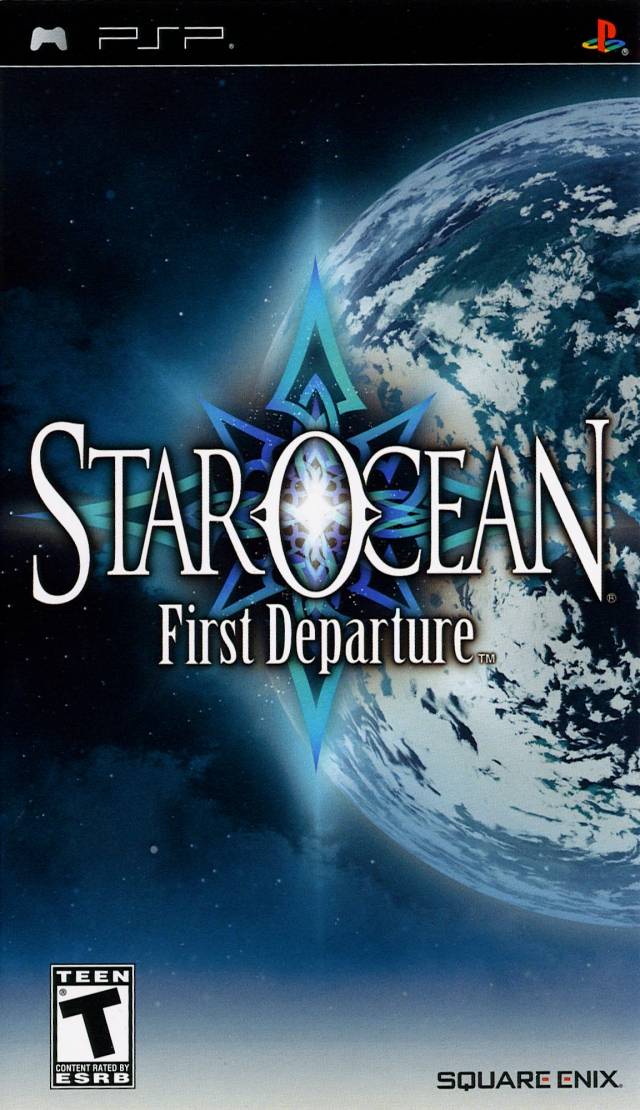
Star Ocean: First Departure


Released in 2007 in Japan and 2008 in Europe and North America, First Departure is the remake of the first game in Tri-Ace's Star Ocean series and is published by Square Enix. The original game was titled Star Ocean: Fantastic Space Odyssey, and was released in 1995 on the Super Famicom (SNES). It was developed by the group Wolf Team, and they previously released another RPG on the same console called Tales of Phantasia. After several creative disputes with their publisher Namco, after the released of Tales of Phantasia much of the development team left and started Tri-Ace and ran to another publisher, Enix. this is the reason why the Star Ocean series and the Tales series both share many similarities, and even the early games shared some of the same spells. They decided to stay way from some aspects of the typical high fantasy setting of many RPG games and focused on a heavily Star Trek influenced story and follows it up with science fiction elements.

The original version of Star Ocean was considered ahead of its time, and completely pushed the limits of the SNES. Sadly this game never saw the light of day outside of Japan, largely due to Enix closing it's North American market, and also due to it being a late SNES release, and Nintendo of America pushing the then new Nintendo 64. There is a fan translation available of this game.

In 2007 the game was finally remade for the Playstation Portable and released in the West. This version uses an updated version of the engine for Star Ocean: Second Story, and was developed alongside the enhanced port of that game, now called Star Ocean: Second Evolution. With this remake, they had help with the animation company Production IG, famous for Ghost in the Shell, and more recently Attack on Titan. There are many updates compared to the SNES version, as they added a few bonus characters, new soundtrack, and updated character designs and cutscenes. Despite all these changes, the story and gameplay is pretty unchanged.

Now for the actual review:

Story:
You play as a young warrior named Roddick Farrence who lives in the small town of Kratus. He runs a Defense Force team with his friends Dorne Murtough and Millie Chilette, and together they defend the village from robbers and thieves. They're young Fellpools who are a race of humanoid beings who have tails and pointy ears and live on the planet Roak.

After a day's work, they receive a letter that a nearby village has been plagued with a contagious disease causing everyone to turn to stone, and Dorne has the disease. They hear of an herb that is claimed to heal the stone sickness, and head off to Mount Metorx. Once they reach mount Metorx, they see a flash of light and two beings appear in front of them. They introduce themselves as Ronyx J Kenny and Illia Silvestri, and are part of a Galactic Federation, and are from the planet Earth. They have to bring the sad news that the herbs they seek won't cure the disease and bring the trio aboard their spaceship.

After Dorne is placed in medical care, the federation discovers that a rival group are supposedly creating a bio weapon by using the people on Roak. They realize that the only way to stop the disease is to find the host, but the host has been dead for 300 years. So Ronyx and Illia take Roddick and Millie to a planet that carries a time gate, and they travel 300 years to the past to find the demon Asmodeus to receive the cure for the disease. Thus the adventure begins.

Gameplay:
Largely a fairly traditional RPG with random encounters, the battle system is what sets the game apart from other RPG's. The battle system takes place in real time, and is similar to an action RPG where you can mash the action button to attack the enemy. You can assign special skills to the shoulder buttons What separates this from a real action RPG, the battles take place in another screen, and there are still menus to cast other spells, or use items. It's like a pseudo-action RPG with menus.

The rest of your party runs on AI and you can't really control them outside of setting tactics. So if you're tired of that character for always wasting their SP, you can set their tactic and tell them to save that shit up.

There's also a skill system where you can customize characters with various skills. While some of these help in battle, like increasing speed or recovery time, these skills are mostly for other aspects like item creation, via cooking meals, or creating items you can't find in stores.

There is also a feature called Private Actions, where when you enter a town, you can have the party explore the city on their own, and you can talk to them individually. This is an optional feature, and helps a bit with character development. This can also alter what happens in the various endings.

Visuals:
Since it uses the engine from Star Ocean: Second Story, with its 2D sprites on a pre-rendered backgrounds, the game looks like a game from the original Playstation. While not as graphically impressive as other PSP titles, it at least gets the job done like many other PSP ports of PS1 games. The game does feature a portrait of a main character's face in the dialog, and their face changes to depict their emotions.

Unlike the original version of the game, it does have a traditional overworld, and if you've played the original version, this gives the world a much larger feeling.


Music:
Like everything on this remake, the soundtrack was updated. It does sound a lot better than the SNES version, so while the original had a really good soundtrack, an updated version is much nicer. It does have a typical JRPG style soundtrack, but there are a few memorable tracks. The opening of the game even features the anime tradition of having a J-Pop theme song and it's a fairly likable track.

Verdict:
Star Ocean: First Departure is a pretty solid JRPG, and is a very recommendable title for those who are fond of the older RPG's from the SNES and PS1 days. The voice acting is decent, while not the best acting, and is patchy at times, it's definitely not something to cringe over. This game does show some of its age, so it may not appeal to those who want a more modern approach to their RPG's, but for those who either like RPG's in general, or want to play a lost classic, this is a very solid game to add to your collection.

Music: 7/10
Visuals: 7/10
Story: 8/10
Content: 8/10

Conclusion: 8/10

Monday, December 9, 2013

Dragon Quest V - Hand of the Heavenly Bride


Part 2 of the very loosely connected Zenethian trilogy (read the DQ4 review to know why) in the Dragon Quest series, and the first of the two "lost epics" to be released outside of Japan (with the other one being DQ6). Dragon Quest V is a game that has quite a legacy in its home country but is largely unknown to the rest of the world. For over a decade, it has delved in relative obscurity and was only known to the hardest of the hardcore fans who either had to learn Japanese to play the game, run through the game without knowing Japanese, or downloaded fan translated patched roms, but as of 2008, Dragon Quest V was remade on the DS and got its long awaited worldwide release, so we finally get to see what the fuss over the game is about.

Released in 1992 on the SNES (Super Famicon for the purists) DQ5 was the first game in the series to be released on the new console. It was later remade as a PS2 game featuring 3D graphics, and a live orchestra soundtrack, and remade again for the DS. Some might feel that we got short-handed with the DS version, but either way it's still makes a solid DS game.

Story:
Despite being released about 15 years too late, the game is still praised in its unique storytelling, which spans several generations of the hero's life. In typical Dragon Quest fashion, you play as the silent protagonist who has no default name. In the early parts of the game, you play at a young 6 year old boy who is on a journey around the world with his father Pankraz. The early stages involve you exploring a cave by yourself, ghost-busting with your old friend Bianca, save the Fairy Kingdom and playing with the bratty Prince Harry.

Though through a series of events, the game fast-forwards several years until your adult age. With this, things change a bit and you are now able to enlist monsters into your party to aid you in your journey. Also in this section, you even go through the dramatic event of getting married. This is where the DS version changes up from the original version. In the other two versions, you had two choices for wives, this one adds a third. You can select between your childhood friend Bianca, Nera, the daughter of a rich entrepreneur, or Nera's older sister Deborah, who is special to this version of the game.

This section is very unique, as it's supposedly the first video game to depict a pregnancy. Regardless of who you pick, she joins you in your party as a fighter, though this is where the similarity ends. One of the more petty results, is that your children's hair color matches the hair color of the mother. The more important reason, is the overall stats and skills of the three women. Bianca is the heavy magic user, Nera is more of the healer, and Deborah is the physical attacker. There's ongoing flamewars over which girl you should pick, but the two biggest camps is for Bianca or Nera. Deborah gets the low end of the flamewar as she's not an original character, so you can see how she's kind of thrown in. The Bianca haters are against her, because the game sort of guilt trips you into marrying your childhood friend, but it's not like there's any real consequences of not picking her, but we all know how dumb fans can be...

The last section takes place 8 years after the last section, and this is where your children become important characters. They also don't have default names, and you name them yourself. The son is the physical attacker, and your daughter is the magic user.

Throughout the course of the game, you go through a revolving door of party members. So the only static character in the game is you. Later on in the game, your monster party does stay static (well depending on how often you switch around monsters you recruit), but all the human characters do pop in and out various times in the game. This is definitely a plus for those who are big on switching around their members to prevent getting bored, but the ones who go OCD and want their party to be static, this is a big no-no for you.

Gameplay:
For the main gameplay, it's your typical Dragon Quest game which means it's very traditional. So there isn't much that needs to be talked about. What we do need to talk about that's unique for this game in the series, is the monster recruiting.

Allegedly the game that inspired Pokémon, Dragon Quest V introduced the ability to recruit monsters into your party. Despite Megami Tensei doing it in 1987, Dragon Quest is a bigger hit, and was a much more "family friendly" adventure. Unlike Pokémon where there's a strategy to recruiting, and you can recruit any monster, Dragon Quest V just has a limited number, and they randomly join you when you defeat them. Basically you just fight them and if you're lucky enough, they'll ask to join your party.

Monsters, like your human party members, level up, and can equip weapons and armor. Each monster is unique to what it can equip and what types of moves it can know. If your party gets full, the monsters get sent to a "Monster Gramps", which is an old man who takes care of your other monsters. Think of him like the PC's in Pokémon.

Graphics:
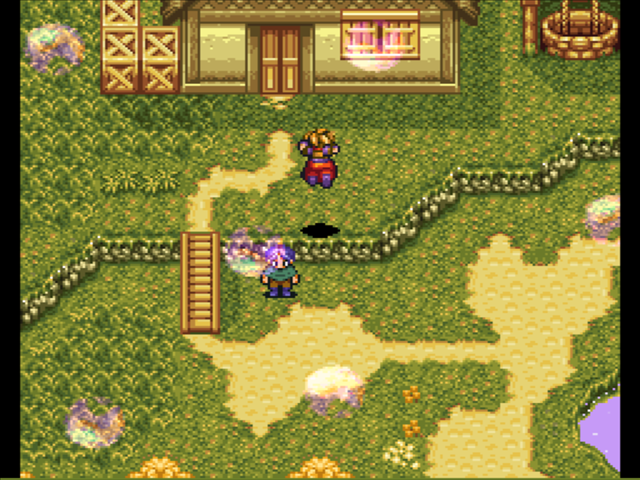
For the graphics, there isn't much to say that hasn't already been said, as it uses the exact same engine as Dragon Quest IV's DS remake. This is definitely kind of a lazy thing to do when you're releasing separate games, though it's possible they did this because the developers were producing them at the same time, but they should do some changing up like they did in the DS version of Dragon Quest VI (more on that in a different review). So if you want to read about the graphics, look at the DQ4 review.

Here are the comparisons between DQ4 and 5:

DQ4

DQ5


Music:
 Once again series veteran Koichi Sugiyama has composed the soundtrack, as he has every other DQ game, and he once again hasn't failed us (will he ever?). There's a multitude of wonderful tracks on here that change for the given mood. While not as awe inspiring as the soundtrack of the PS2 version, but that's kind of hard to compare when you're using a real orchestra, but this is nicer quality than the SNES version. We do get a full orchestra for the Dragon Quest fanfare at the opening sequence. There's several heartwarming tracks, and several beautiful tracks. If you're a big fan of the soundtrack, it's highly recommended to check out the Symphonic Suite renditions of the soundtrack, as that's all the orchestrated versions of the songs.


Verdict:
Dragon Quest V, despite getting a 15+ year late release, it's still a timeless classic that any RPG fan should sink their claws into at least once. With its unique and engaging storyline, it's difficult to put the DS down to see what happens next.

Music: 9/10.
Visuals: 6/10.
Story: 10/10.
Content: 8/10.
Conclusion: 9/10

Thursday, December 5, 2013

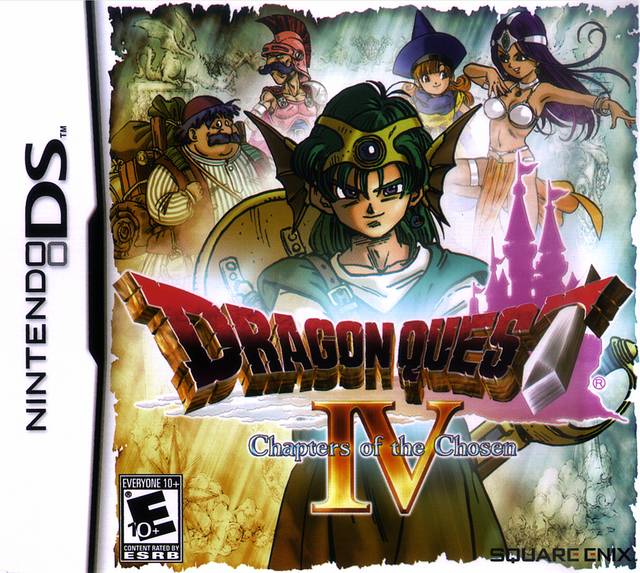
Dragon Quest IV: Chapters of the Chosen

The Dragon Quest series is a household  name in Japan, but in the US, hardly anyone that isn't an RPG fanatic know of this series. This game is the first in the loosely connected Zenethian trilogy of Dragon Quest games. When I mean loosely, I mean very loosely, as the only real connection between these games is that there is a castle Zenethia, and the dark world of Nadiria as the demon world. Other than that, they really have fuckall to do with each other.

The original version of this game was released in 1992 in the US as Dragon Warrior IV. While a very late release for the NES in the US, its impact in the realm of RPG's with its innovative storytelling, and the final boss Psaro with its multiple form boss fight. The game was remade for the PS1 using Dragon Quest VII's engine, and was planned for a US release as entailed in the back of the DQ7 manual, but it never came to be. The game was again remade for the DS, but is more like an enhanced  port, rather than a full on remake, as it's just an updated engine.

Story:
The first part of the loosely connected Zenethian Trilogy in the series, IV decides to split up the game into 5 chapters, with the first four chapters focusing on a different character, or group of characters, that all come together to join you in the final chapter where you finally get to play as the hero you named before you started your adventure. Each chapter has a miniature story that you go through that, like the characters, all come together in the final chapter.

You have:
Chapter 1 - Ragnar: a soldier in the castle town of Burland. He discovers that the children of a nearby village have been disappearing and he must go and rescue them.

Chapter 2 - Alena: Alena is the tomboyish Tsarevna (princess) of the Russian speaking land of Zamoksva, she sneaks out of the castle to go on an adventure to test her strength. She is followed by her tutor Borya and her priestly friend Kiryl.

Chapter 3 - Torneko: Torneko is a merchant from a small town with a dream to run a thriving business with his family in the castle town of Endor. Out of all the chapters, this one is quite strange as it's not as very action oriented as the rest of the game. You spend a large chunk of the game either running stores, and even running around raising money to have items for your store.

Chapter 4 - Maya and Meena: Maya and Meena are two dancers who go out on a quest to exact revenge on the man who killed their father.

Chapter 5 - Hero: You, the Hero's, peaceful hometown has just been attacked by monsters and during this, your dying friend reveals that you are really the Legendary Hero and you must follow your destiny to rid the world of evil.

The PS1 and DS remakes also contain a prologue and a Chapter 6. The prologue consists as an intro for the hero, and Chapter 6 is the aftermath of defeating the evil Psaro the Manslayer.

Unlike many of the Final Fantasy games, Dragon Quest as a series isn't necessarily renowned for its rich storytelling, the series largely focuses mostly on the quest. That's not to say the story is bad, it's just not a story driven game. You should also keep in mind that this was originally an NES game, so the storytelling can feel archaic to those who aren't familiar with the style of retro RPGs.

Gameplay:
For the gameplay, it's largely the same from the NES original, but there are a couple of archaic features that have been updated from the original. They added in auto-target, which is where if two party members target the same monster and one kills it before the other, the second one will attack a different monster. In the original, the second character would just miss, which would mean a lost turn. They also gave you a bag which gives you a limitless inventory. Also in the original, in Chapter 5, your party members were on auto-pilot, which they removed so you can choose to manually control your party.

For the unaltered gameplay, it's your typical JRPG, so there isn't much to explain that people don't already know since the series is known for its very traditional gameplay, which is something the series is largely the standard model other RPG's based themselves off of. Everything down to the exploration and battle system is very standard. For the very standard turn based battle system, you can either manually control your characters, or pick between different tactics where your everyone but the leader is on auto-pilot. This is all done in a first person view, so all you see is the monsters and the portraits of your character above your stats. So if you were looking for a unique gameplay experience, then you'll probably be very disappointed.

Graphics:
The graphics may be loads better than the NES version, but if you're expecting fancy graphics for the DS, then you should look away. The game looks like a souped up SNES game, but it's detailed enough to make you not really worry about it. Despite looking like a fancy SNES game, the towns and dungeons are in a somewhat 3D environment. While still keeping a top down view, you can rotate the camera a full 360 degrees around in villages and in certain dungeons. With this, you can notice that the buildings and trees are actually made of polygons that add more depth to your environment. While the PS1 version has a more isometric town with 2D sprites with the houses looking more three dimensional, the DS version looks more smooth and the houses blend with the sprites better than the PS1 version.

The game utilizes both screens in an interesting fashion. Much of the game takes place on the lower screen, but when you're in towns and in large dungeons, the visuals extend into the top screen, giving you more to see. This is a pretty neat feature, and adds more depth to your world, allowing you to see how large the castles and such are. In the overworld, the top screen shows you the world map. It's interesting how accustomed you get to this when you decide to play the NES version, and you're having to search for a map to figure out where you're supposed to go.

A complaint that some people have with the game is that there is a lot of cookie cutter graphics that they have throughout the game. They have sprites for the same generic townspeople, down to the trees and houses in the towns. Despite the fact that each town has a unique layout to it, some people are not satisfied that the various towns themselves feel too copy and pasted. Though if you're familiar with the franchise, this isn't anything new, but if you're a newbie to the series, this is something to consider.

The artwork is where Dragon Quest is known for. Returning to the series, the famed manga artist Akira Toriyama of Dragon Ball fame once again has come to design the characters in your party and the monsters. While he designed them for the NES game, the DS game does more justice to his art. The monster sprites in battle, while two dimensional, are animated and the animation for the spells are nice enough to get the job done. Another minor complaint newbies to the series will find is that as you get farther in the game, they'll start color swapping some of the monsters. If you're a veteran to the series, or to other RPG's from that era, it's not that unusual (even Final Fantasy is still guilty of it), but it feels a bit lazy for modern gamers, so you should keep in mind that this is a game from 1992.


Music:
For the music, series composer Koichi Sugiyama returns to compose the music. While a massive step up from the simple NES soundtrack, it still sounds massively similar to the PS1 version, but the opening Dragon Quest theme is performed by a real orchestra which is always better than a midi track. The interesting aspect of the soundtrack is that they have different overworld themes for each chapter, and they even change it in the middle of the 5th chapter when you gather all of your party members from the first four chapters. The music itself is very well composed and sounds fantastic when performed live in a full orchestra, so if you really enjoyed the soundtrack, each DQ game has a full orchestral album. The town music itself is very bright and cheerful and you'll end up humming the theme when you're visiting in and out of town. While there are several tracks on the OST, it's not as diverse as modern RPG's, so you're going to end up hearing the same town music in pretty much every town that doesn't have a castle and the same cave music over and over. So if you're looking for a diverse soundtrack, this might be a concern for you if you easily get sick of hearing the same songs over and over.


Dragon Quest IV is a fantastic game and is highly recommended for those into the classics, but if you're a fan of modern RPG's, this game as a whole will probably feel too archaic for you. So if you're not a hardcore RPG fan, or looking to bask in classic gaming, Dragon Quest IV is not the game for you.

Music: 8/10.
Visuals: 6/10.
Story: 7/10.
Content: 7/10.

Conclusion: 7/10

Wednesday, December 4, 2013

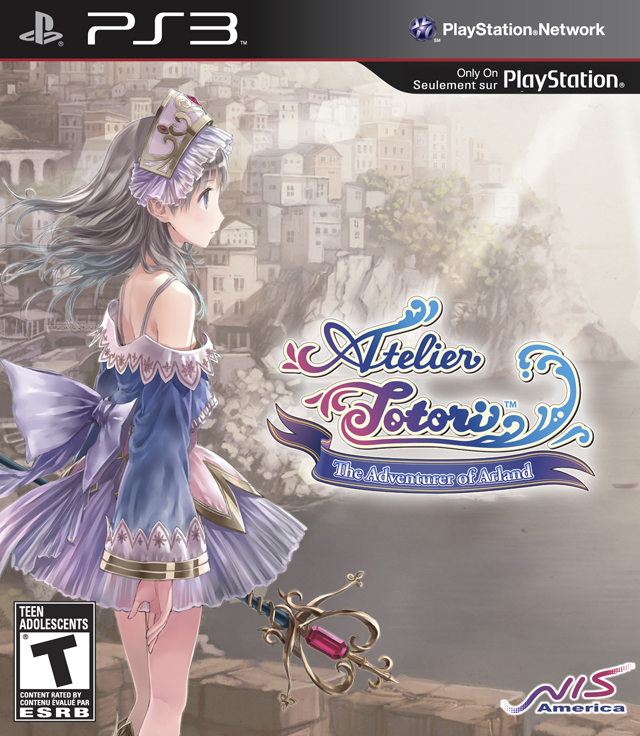
Atelier Totori: The Adventurer of Arland


Developed by Gust in 2010, and published by Gust a year later in the rest of the world, Atelier Totori is the 12th installment in the long running Atelier series. It is also the second game in the Arland trilogy on the PS3, and is the sequel to the game Atelier Rorona.

Some of you are probably scratching your heads thinking "what the fuck is the Atelier series and how are there 12 games already?". Don't worry, it has a small fanbase and isn't very popular, so chances are most of you haven't played the PS2 games.

The Atelier series is a departure from other RPG's where there's a large focus on using alchemy to synthesize items instead of promoting itself as an epic tale.

Story:
Taking place 5 years after the first game, Atelier Rorona, you play as the titular character Totori who, as the subtitle suggests, has a dream to become an adventurer and discover the whereabouts of her mother, who has been missing for years. As you soon find out, Totori is an alchemy student of the previous game's heroine Rorona, who is going around the countryside looking for her old teacher. 

You gain your adventuring license about 30 mins into the game, and most of the game consists of you wandering around the world doing either fetch quests or monster hunting for the Adventurer's Guild, with bits of the story here and there to progress the plot. Unlike the previous game, this game has a story that feels like it actually matters more. The previous game followed sort of a Harvest Moon type of deal where Rorona has X many days to make the alchemy lab prosper, or risk shutting down, while this one makes you continue because you're curious about what happened to Totori's mother.

For such a non story heavy game, there's a fairly decently sized cast full of colorful characters, with a handful returning from the previous game. The game also has a very large emphasis on kawaii, which you'll soon discover with its heavy focus on mostly female cast members, and many of the male characters are either uninteresting, or unimportant. So unlike games like Dark Souls and Skyrim where it's all testosterone filled badassery, this game focuses heavily on kawaii instead. Despite having cutesy shojo style artwork, you'll soon discover that the kawaii nature of this game is heavily catered towards guys, especially with its very questionable dialog that appears from time to time. While some of the dialog is just silly stuff discussing who has a cuter butt, there's some pretty heavy lesbian subtext, especially with the character Melvia who you'll find out molests Massages Totori and her friend Mimi, and a few other questionable deeds. So it's strange seeing molestation jokes about groping 14 year old girls, but it's totally acceptable when they're getting molested by another girl because yuri is totally hot. So it's reassuring to know that it's only considered child molestation if it's an older man touching a 14 year old girl.

While it's not to say this game is not girl friendly (there's a large female fanbase), and not dangerous for your little sister to play. It does get a bit too silly at times, especially when the town creeper Peter makes you go out and find 8 beautiful women for the town festival and later reveals it as a dubious plot to host a swimsuit contest. There are a few instances where it comes off like some weird otaku wrote a few PG scenes of his favorite yuri pairing.

The game has voice acting, and the female voice actors (excluding Pamela) are pretty good and even has a few known anime voice actresses like the famous Wendee Lee, Cristina Vee, and Cassandra Morris. The male actors range from decent to meh. The game does have the option for the Japanese audio, but you'll probably end up changing the voices back to English because all of the female characters almost all sound the same and have the high pitched kawaii voice, so the really high pitched voices can start to get grating after awhile. As you can see, Japanese voices don't always make things better, unless you're one of those weaboos who demand everything is Japanese, but fuck those guys anyway.

Characters:
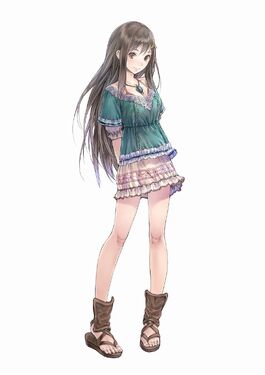
Totooria Helmold: 
Known as Totori for short, she's the protagonist of the game. She's 13 in the Japanese version, and 14 in the North American releases, because somehow that one year makes a huge difference when it comes to molestation jokes. Anyway, she follows the moe archetype of the clumsy girl, and she's very optimistic. She's one of those super girly girls, and likes cute things.There's times where it feels like she has more sense than her friends because Melvia is crazy, and Rorona can be like a big kid.

Cecilia Helmold:
Known as Ceci for short (pronounced Setsi), she's Totori's overprotective older sister. Since their mother's been missing since Totori's childhood, Ceci doubles up as the motherly figure in Totori's life, as she's the housekeeper, cook, and the one who bitches at Totori for fucking up everything. She's an NPC, but if you really like her, she's available as a paid DLC character where you can have her in your party. The town creeper Peter is in love with her, but he's too much of a loser to confess to her.

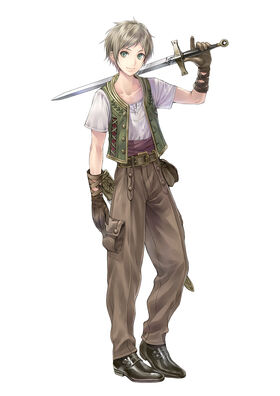
Gino Knab:
Totori's childhood friend, and the first person to join you in your party. He also shares Totori's dream of being an adventurer. Since he's Totori's childhood friend, there's a lot of shipping going on between the two of them, because we all know he wants her V.

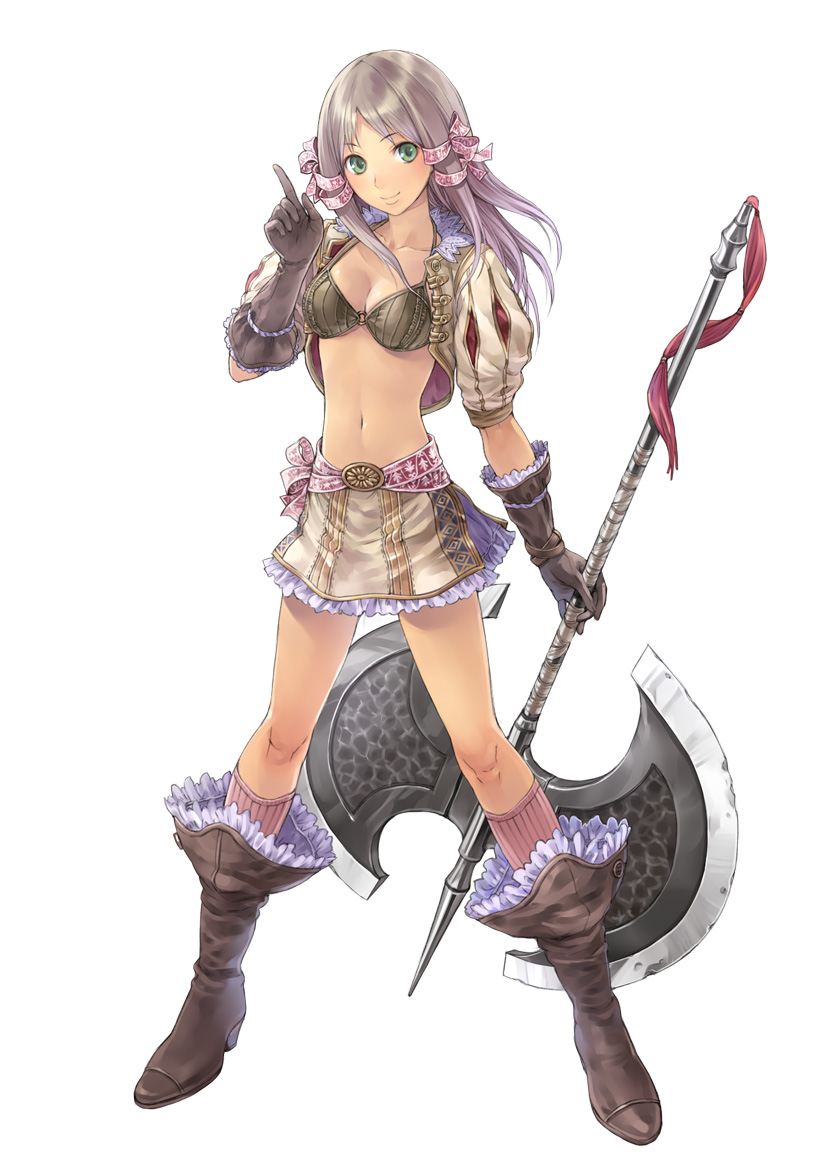
Melvia Siebel:

The next person to join your party is Melvia, or Mel for short. She's the sexy, yet skilled, adventurer who is renowned for her monster strength, and she's legal age. She's a highly recommended person to have in your party based on her strength and her ass-kicking skills. She's also the pervert of the game, as she's groped all of the female party members, which is why Mimi gave her the nickname, Molester Woman. Rorona calls her Mellie because she thinks it's cute.

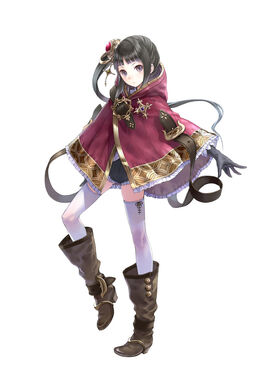
Mimi Houllier von Shwarzlang:
Winner of the most ridiculous name award, Mimi is the required tsundere character in the game. She's those mouthy girls who loves bragging that she's from a rich family. She's the same age as Totori and also aims to be a renowned adventurer. She claims she joins Totori's party because she needs someone with alchemy skills in her party, but they really do a half-assed job of explaining that. She seems to be really good friends with Totori, but because she's a tsundere, she'll never admit that. She's surprisingly polite to Ceci, and has grown up very well in Atelier Meruru. She fights with spears and has pretty decent strength.

Rorolina Frixel:

Known as Rorona for short, she's the formerly underaged protagonist of the first game, and is Totori's alchemy teacher. She's best friends with Cory at the Adventurer's guild, and like Totori, she's pretty clumsy. She joins your party later on in the game, and you get to use her workshop when you're in Arland. She creates the homunculus Chim to help you  with alchemy, and loves pie. She fights with bombs, which is very helpful as it can attack multiple enemies at once.

Those are the more important characters, there's many more, but that just ruins the fun of the game.

Gameplay:
Much of the game consists of you doing various fetch quests or going on hunts. As the game progresses, you have two bases of operation. Your house in Alanya Village, and Rorona's in the capitol Arland. At your bases, you have the option of saving your game, using alchemy to synthesize various items, or go to sleep to regain health and MP used to synthesize. Also the towns your bases are in are also the only two places to pick up the job requests, and to report them to gain gold and extra synthesis ingredients. Arland is the only place where you can update your job license, and to order weapons and armor.

With your adventuring license, you can gain points by doing the various jobs, or by exploring various regions in the overworld. So it's best to periodically visit Cordelia in the Adventurer's Guild and see if you rack up enough points. With the weapons and armor, you must collect the required ingredients first, and then Hagel will forge the weapons and armor for you.

Another feature of this game is that there's a time limit. The game progresses in days, and synthesizing and traveling across the overworld takes up days. So anyone completely unfamiliar with the series will probably not be able to manage their time well enough to beat the final boss in their first playthrough, but luckily the way the game is, you can transfer your equipment over in a new game plus.

Monster battles are largely standard turn base battles. The only thing that's a little different is that monsters appear in lines, so certain attacks can attack monsters in either a horizontal or vertical line, while Rorona's bombs can attack a large sum of monsters at once.

Graphically the cell shaded anime graphics are pretty nice. There are a few annoying instances: like how the game isn't fully 3D. It's sort of like Final Fantasy X where everything is 3D, but it's all a fixed camera angle, you'd think that a game on the PS3 is fully capable of being completely 3D with rotating cameras. Another thing is that all the story and dialog is done in visual novel style. Where they show just an image of the character that's talking, and change their expression to match the emotion. It seems a bit lazy that they can't fully animate the character models when they're talking.


Music:
Not much to say about the music, but it's alright. It's decent and matches the kawaii nature of the game, but outside of that, there's not many standout tracks, though I do have to say the theme song during the title opening is fucking atrocious. Though if you really enjoy the game, you can buy the OST off of the PSN in the DLC section.


Verdict:
Atelier Totori is one of those games that one shouldn't really take seriously, as it doesn't doesn't present itself as a serious game. So while it's not an RPG that prides itself as an epic tale, it's like a nice breather where you just spend time collecting items to synthesize or fighting monsters. So while not a memorable game, it's one of those games that are a nice way to kill time. So if you're okay with kawaii and blatantly obvious yuri, then you should be able to stomach this game.

So in a nutshell, Atelier Totori is not for those who are serious gamers, but if you just want a relatively simple game as a breather, then Atelier Totori is for you.

Music: 7/10.
Visuals (Or Graphics): 7/10.
Story: 7/10.
Content: 8/10.

Conclusion: 7/10